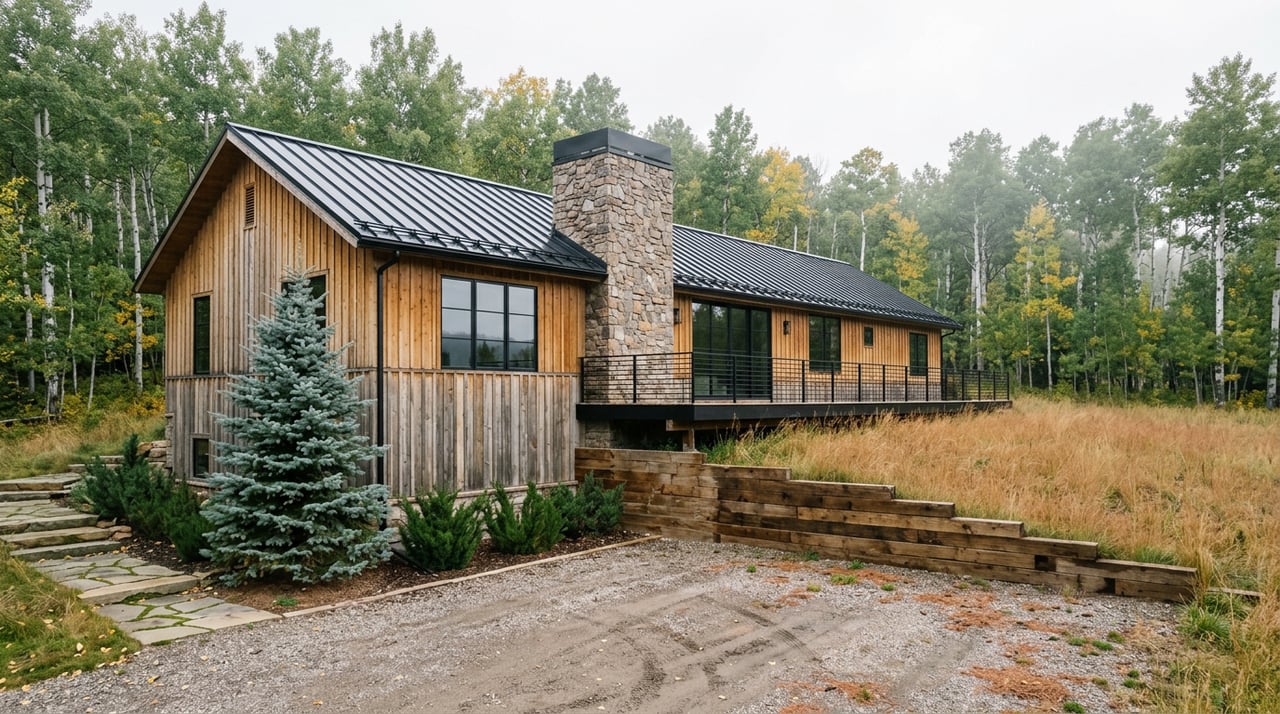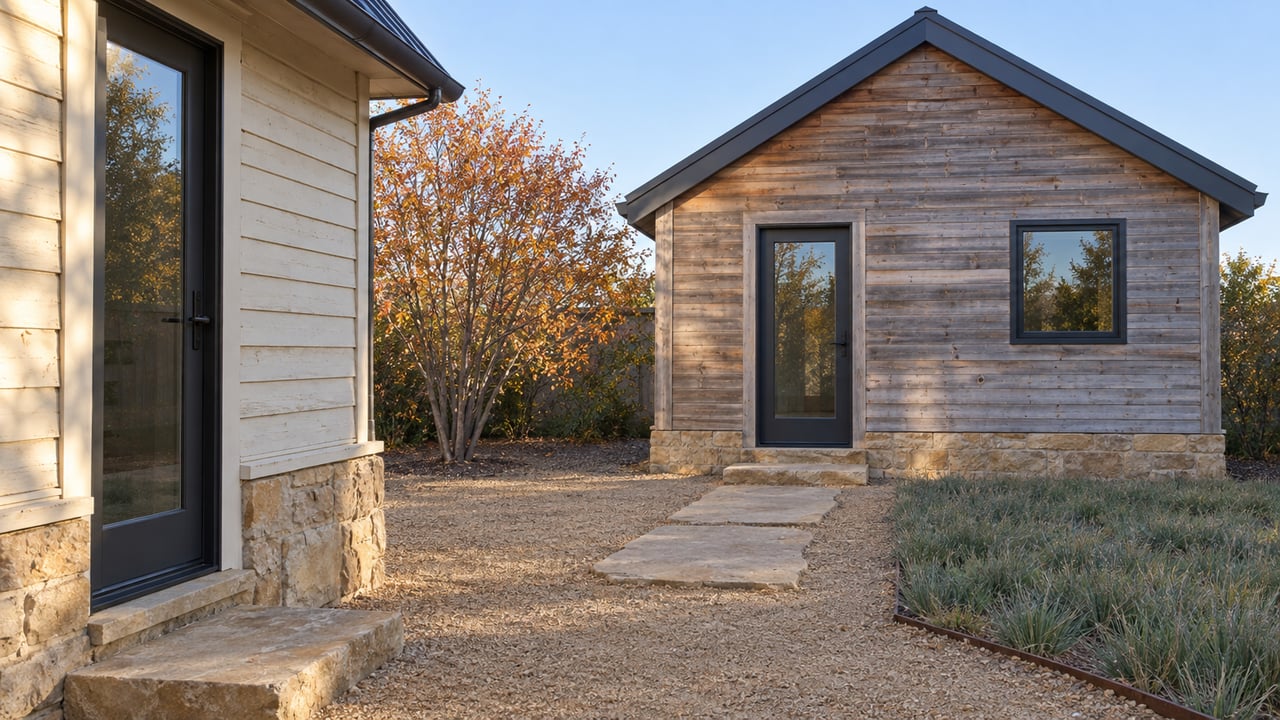
Two buyers walk two blocks apart in Golden on the same Saturday. One is touring a bungalow near 12th Street with a basement that could become a rental unit. The other is looking at a similar-vintage home a few blocks over, past the edge of downtown. Both agents mention the same selling point: Colorado's 2024 accessory dwelling unit law makes adding income potential easier than it used to be. Only one of these two buyers is getting the full picture.
Colorado's House Bill 24-1152 took effect in June 2024 and requires every municipality in the state to allow at least one accessory dwelling unit on a single-family or duplex lot, with approval handled administratively rather than through a public hearing. Golden has gone further than the minimum. Unlike Denver, which caps detached ADUs at 1,000 square feet and limits alley carriage houses to 500 square feet, Golden allows whole-floor internal conversions, such as turning a basement into a legal second unit, without a hard square footage ceiling tied to the primary home's size. For a buyer weighing a Golden purchase partly on rental income potential, that is a meaningful structural advantage over some neighboring cities.
It is also only half the story if the address in question sits inside one of Golden's three locally designated historic districts.
Three Districts, One Different Set of Rules
Golden's Historic Preservation Board oversees three locally designated historic districts: the 8th and 9th Street Historic District, the 12th Street Historic District, and the East Street Historic District. The 12th Street district carries extra weight as Golden's original National Register historic district, designated when the city's preservation program began in 1983.
Property inside any of these three districts, or an individually designated landmark, triggers a different review path for most exterior alterations. The city requires a Certificate of Appropriateness before most exterior changes to a building within an established historic district, reviewed by the Historic Preservation Board rather than approved administratively by planning staff. A detached ADU, or any conversion that changes what the outside of the house looks like, generally falls into that category.
The paperwork is not trivial. A Certificate of Appropriateness for compatibility requires architectural drawings of every affected elevation, specific materials and manufacturer colors, and historical documentation of the existing structure. For new construction or major facade work, the city also requires a context study covering surrounding structures within a two-block radius of the property. A Certificate of Appropriateness for demolition adds a $500 application fee per property, a letter of intent, and an existing-conditions report that includes a professional structural assessment.
The city's own public notices show this process still running as a genuine public hearing, not a rubber stamp. The board's docket has included a rear addition at a home on East Street reviewed in a February 2025 hearing and an addition to a stone barn at a Cheyenne Street property reviewed that June, both scheduled as evening public meetings at Golden City Hall with a public comment period built in. That is a different clock than the administrative-only approval the state ADU law promises for most Colorado homeowners.
Here is the comparison a buyer actually needs before assuming their renovation budget or timeline:
| Standard Golden ADU | ADU inside one of Golden's three historic districts | |
|---|---|---|
| Approval type | Administrative review, no public hearing required | Certificate of Appropriateness review by the Historic Preservation Board |
| Public hearing | Not required under state law | Scheduled board hearings for exterior work, as the 2025 East Street and Cheyenne Street cases show |
| Documentation | Standard building permit set | Elevation drawings, material specs, and a two-block context study for major changes |
| Added cost | Standard permit fees | Demolition-related work carries a separate $500 application fee per property |
The Exemption Nobody Reads Closely
State law adds one more wrinkle worth understanding before you fall for a listing that leans hard on renovation potential. Colorado's ADU mandate does not apply to what the statute calls exempt parcels, which include properties that are historic but not located within a historic district, properties without domestic water and sewer service, and properties located in a floodplain. That exemption means a city is not legally required to approve an ADU administratively on those parcels. It does not mean an ADU is automatically off the table there. It means the honest next step is a direct question to Golden's planning department rather than an assumption in either direction.
Clear Creek adds a real-world version of that floodplain carve-out in Golden specifically. The creek runs through the center of the city, and properties mapped in Zone AE face their own building and insurance requirements under the city's floodplain management program. A buyer weighing ADU income against a creek-adjacent lot is really juggling three separate lines at once: the historic district boundary, the floodplain boundary, and the standard administrative path that applies to neither.
Why the Price Tag Doesn't Warn You
Golden's own city guide splits the town into five informal areas: Historic Downtown, Gateway Village, North Golden, South Golden, and Lookout Mountain. Prices generally climb the farther a property sits north or west of downtown. Lookout Mountain listings have ranged from roughly $780,000 to $2.5 million, while single-family homes citywide have carried a median sales price of around $940,000 and townhomes closer to $635,000. West Pleasant View is known for rows of brick ranch homes, and Mesa View Estates lines the edge of Green Mountain with larger custom properties.
None of those price bands tell you whether a given address sits inside 8th and 9th Street, 12th Street, or East Street. The three historic districts cluster in the older downtown core, which means some of Golden's most character-rich and often more accessibly priced homes are also the ones facing the more involved renovation path. A buyer comparing a $700,000 downtown bungalow against a similarly priced home in South Golden or a newer subdivision like Golden Ridge is not just comparing square footage. They are comparing two entirely different approval processes if an ADU or major exterior renovation is part of the plan.
What to Ask Before You Write an Offer
The fastest way to settle this before you are under contract is a zoning verification request through the City of Golden, which confirms whether a specific lot is eligible for an ADU and whether it falls inside a historic district or floodplain overlay. That single document answers three questions at once: administrative approval or board review, floodplain exemption or not, and whether the home's age alone (over 50 years, in some cases) triggers additional review even outside a formally designated district.
A permit history check matters just as much as the zoning letter. An "updated" listing description does not confirm that every past alteration to the house was permitted, or that a future change to the exterior will be as simple as the last one.
Quick Answers for Buyers Weighing an ADU
Does every older home in Golden sit inside a historic district? No. Only properties within the 8th and 9th Street, 12th Street, or East Street districts, or individually landmarked sites, face Certificate of Appropriateness review. Homes outside those specific boundaries generally follow the standard administrative ADU process the state law guarantees.
If a property is old enough to be historic but sits outside a district, does that block an ADU? Not automatically. The state exemption only means Golden is not required to approve one administratively there. Whether the city allows one under its own local rules is a direct question for the planning department, not something to assume from a listing description.
Does the Clear Creek floodplain change the ADU math too? It can. Parcels mapped in the city's flood zones fall under the same state exemption category as historic-but-undistricted properties, and Clear Creek runs through enough of central Golden that a floodplain check belongs on the same list as the historic district check.
If you are comparing a Golden listing partly on what its basement or backyard could eventually become, that comparison only holds up once you know which side of these lines the address sits on. Living at Altitude can pull the zoning verification and historic designation status on a specific property before you write an offer, and if you are deciding whether a move within Golden pencils out at all, Get Your Instant Home Valuation is a reasonable place to start that conversation.